
5 Components To Secure Embedded System Half #2 Root-of-trust Rot Beningo
If it is deemed that the RoT only must maintain a root key protected, then a PUF would kill two birds with one stone, by performing as a source for the important thing, as nicely as its storage component. Lastly, to prevent the basis key from being ascertained via bodily examination of the inner reminiscence array, the selection of anti-fuse primarily based OTP reminiscences could give more peace of mind over these based mostly on eFuses. Creating a secure IoT node begins with a “root of trust”, a small reasonably priced built-in circuit designed to supply security-related companies to the node.
- To recap, a root of belief is the fully reliable boot logic that sits at the “root” of a system.
- It would be good to search for a RoT with native help for the AXI/AHB/APB bus protocol.
- Secure storage, on this case, implies that the info isn’t written as plaintext and that once written, the info should be unable to be modified.
- Containing the keys used for digital signing and verification, together with the cryptographic features to enable the safe boot process, a RoT is an essential security asset indeed.
- The final merchandise on the list refers back to the primary word in RoT – “root” – a RoT sits on the very starting of a system – it’s the root, or anchor, upon which the safety of the system rests.
- Pre-boot can use a computer chip known as a Trusted Platform Module (TPM) to verify/measure integrity and secure the boot process from low-level malware.
Entry to crypto modules, keys, reminiscence ranges, I/O, and different sources is enforced in hardware. Critical operations, including key derivation and storage, are performed in hardware with no entry by software program. The Foundation of Trust relies on a custom 32-bit processor designed particularly to supply a trusted foundation for safe processing on chip and in the system.
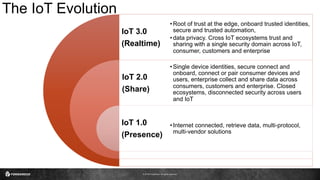
Layered Safety:

Sure, an ECC module that gives full help of all NIST-recommended fifteen curves would be very strong, but if the appliance doesn’t even need public key cryptography, then all that silicon space will be simply sitting idle, taking on area. Taking the common elements from the previous section’s definitions of a root of trust, we will distill the basic parts of a RoT into the above record. The first item is “trust” – that is, the system can depend upon the RoT at all times, especially at boot up. Since there isn’t any method to independently confirm the authenticity of a RoT at boot up, then it must be implicitly trusted right at power/start up of a system. To do so, it is recommended that earlier than installation of a RoT, that it is verified to be legitimate and genuine, and that a report of that verification is stored on the RoT itself, so that it might be re-verified throughout runtime, as needed. GlobalPlatform differs from the others by introducing the idea of two forms of RoT, the bootstrapped and non-bootstrapped.
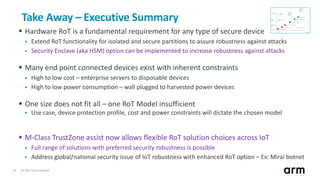
Iot Device Firmware Safety Enhancements
Right Here GlobalPlatform introduces the ideas of an preliminary RoT (iRoT) and an prolonged RoT (eRoT), which together make up a bootstrapped RoT. However for functions of simplicity, this paper will concentrate on simply the basic configuration of RoT, additionally referred to as a “non-bootstrapped RoT” by GP. If these keys were saved inside widespread microcontrollers, they might be extracted or manipulated, and fake meters or pumps could possibly be manufactured, probably endangering the patients’ security. Where a root of belief is the muse of safety of an IoT system, safe boot is another layer that depends on the immutable trustworthiness of the RoT to run authenticity checks on the device’s software before it’s loaded. As Soon As sufficiently powerful quantum computer systems exist, traditional uneven cryptographic strategies for key change and digital signatures shall be simply damaged. New cryptographic algorithms generally identified as quantum safe cryptography (QSC) or post-quantum cryptography (PQC) are wanted to protect towards quantum pc assaults.
The Relevance Of Security Labeling
When deciding on a microcontroller for our product, we should be sure that we are able to permanently “burn-in” significant data utilized by the Root-of-Trust such as a company personal key. When we energy on an embedded system and start the boot process, we want to ensure that our embedded system boots with legitimate software. The drawback that many methods face is figuring out if the first code that runs on the system is, in reality, their code and genuine. Of course, the system could probably be booting efficiently, however what occurs if some piece of malware is the first thing that runs, and the the rest of the software is trusting that code?
Democratizing Roots Of Trust From Silicon To Software
Rambus’ Parvez Shaik explains the importance of addressing provide chain vulnerabilities, the benefits of a hardware root of belief, and the brand new features of the third-generation CryptoManager Root of Trust products in this episode of Ask the Specialists. Guaranteeing the safety of an IoT node throughout all its life cycle is simpler when the safety IC is commissioned early by the safety IC vendor. This strategy eliminates the need for sharing crucial info with contract producers, and a safe personalization circulate and secure OTA updates are made potential. They leverage the truth that digital circuits are likely to leak a signature of the data they are manipulating, for instance, over the ability provide, radio, or thermal emissions. The estimated annual value of cyber assaults ranges from tens of billions of dollars to over a trillion, and it too keeps rising. Due To This Fact, security issues are now important to continue the successful scaling of the IoT.
Due to the simplicity of implementation and minimal compute required, a PSK is a standard authentication method for IoT gadgets. Additional, using PSKs at scale might show cumbersome since regularly updating and issuing new keys is difficult to do at scale. After having thought through the above considerations, hopefully one will find yourself with a short list of suitable RoTs. The answer is certification – certain governing bodies will run merchandise or designs through a battery of testing, then “stamp” it to indicate that it has handed their testing criteria. The closest factor to a worldwide stamp of approval comes from Frequent Criteria testing, but criticisms of their testing program do exist.
One of these is the time it takes to get a product licensed, which is why France’s ANSSI’s Certification Securite de Premier Niveau (CSPN) program has been just lately gaining recognition, because of their quick timeline to certification. Finally, if the RoT shall be used in a product specifically geared for IoT, then discovering one with that has passed Eurosmart’s IoT Certification Scheme could additionally be of explicit interest. Having a acknowledged and unbiased third celebration give their stamp of approval can give customers peace of mind and reassure them that they’ve chosen a quality RoT.
The prevalence of IoT units has led to a surge within the importance of cybersecurity. Consequently, nations worldwide have launched safety labeling packages with particular necessities and standards. One of the essential https://www.testking.us/the-strategic-integration-of-ai-processes-in-next-generation-smart-grids/ features of IoT safety is the Root of Trust (RoT), which is gaining extra prominence. This article explains why RoT is changing into increasingly very important in IoT cybersecurity and the method it relates to rising safety labeling initiatives. A HSM (Hardware Safety Module), a highly secure and thus really helpful hardware gadget for storing cryptographic keys, can act as a RoT. One RoT can handle belief for many units, making it a extremely scalable element of IoT safety.
A more sophisticated RoT might permit rewrites of its boot code, but only through approved agents, which requires a more advanced control/access scheme than a basic RoT would have. IoT has steadily gained popularity in current years with extra users migrating to digitalized merchandise and smart devices. As an growing quantity of IoT equipment comes online, many unsecured objects might be vulnerable to distant software program assaults. Inadequate safety gives hackers the opportunity to brick and commandeer a device to assist build botnets. These malware networks introduce unauthorized code, steal data, or exploit their hosts via another means.
Cevapla
Want to join the discussion?Feel free to contribute!